TECHNOLOGY
AI Is Watching Your Water Now
Autonomous AI systems are transforming how Europe detects and treats PFAS in water, cutting costs and closing critical monitoring gaps
10 Jun 2026
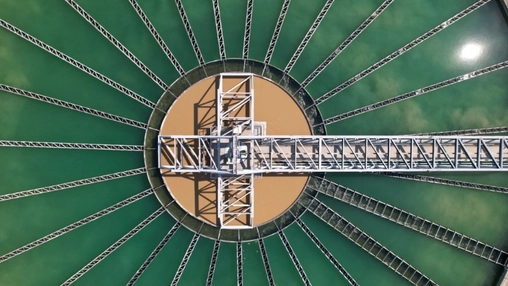
Europe's water utilities are adopting artificial intelligence to manage contamination from PFAS, a broad class of synthetic chemicals that resist breakdown and accumulate in water sources, as two developments in spring 2026 pushed the technology closer to industrial scale.
At the IFAT Munich trade fair in May, Nijhuis Saur Industries and BlueNexus unveiled the i-WaterHub, a modular, AI-controlled platform for treating industrial process water. The system uses standardised hardware modules and automated process controls to reduce deployment time and cut operating costs, while adjusting in real time to shifts in contamination levels. The launch drew attention from utility operators facing stricter PFAS discharge rules without the staffing to match.
Separately, a framework published in ACS Sustainable Resource Management in April 2026 set out a four-tier model for autonomous PFAS monitoring. The paper described how pairing high-resolution mass spectrometry with machine learning could replace manual, compound-by-compound testing. At the most advanced tier, edge sensors and on-site analytics would trigger treatment responses, including flow diversion, without human involvement.
The gap both efforts address is significant. Most monitoring tools in current use target only a subset of the thousands of PFAS variants documented in water systems. AI-enhanced platforms can scan more broadly, identify contamination sources through pattern recognition, and adjust treatment in response, functions that traditional infrastructure handles separately, if at all.
Regulatory pressure is adding urgency. EU rules on PFAS in drinking water and industrial discharge have tightened in recent years, and utilities are expected to demonstrate continuous compliance rather than rely on periodic sampling. Autonomous systems, proponents argue, convert sensor data streams into audit-ready evidence in a way that manual processes cannot.
The challenge now is scale. Most deployments remain at pilot stage, and full integration across ageing treatment infrastructure will require investment and operator retraining. Whether regulators move fast enough to incentivise that transition, or utilities wait for clearer policy signals, remains an open question across the sector.
Related News


SUBSCRIBE FOR UPDATES
By submitting, you agree to receive email communications from the event organizers, including upcoming promotions and discounted tickets, news, and access to related events.